
Vauxhall History co-editor Ross Davies describes how Vauxhall inspired his reconstruction of the life and mysterious 1943 death of actor, playwright, poet – and Secret Service officer Stephen Haggard
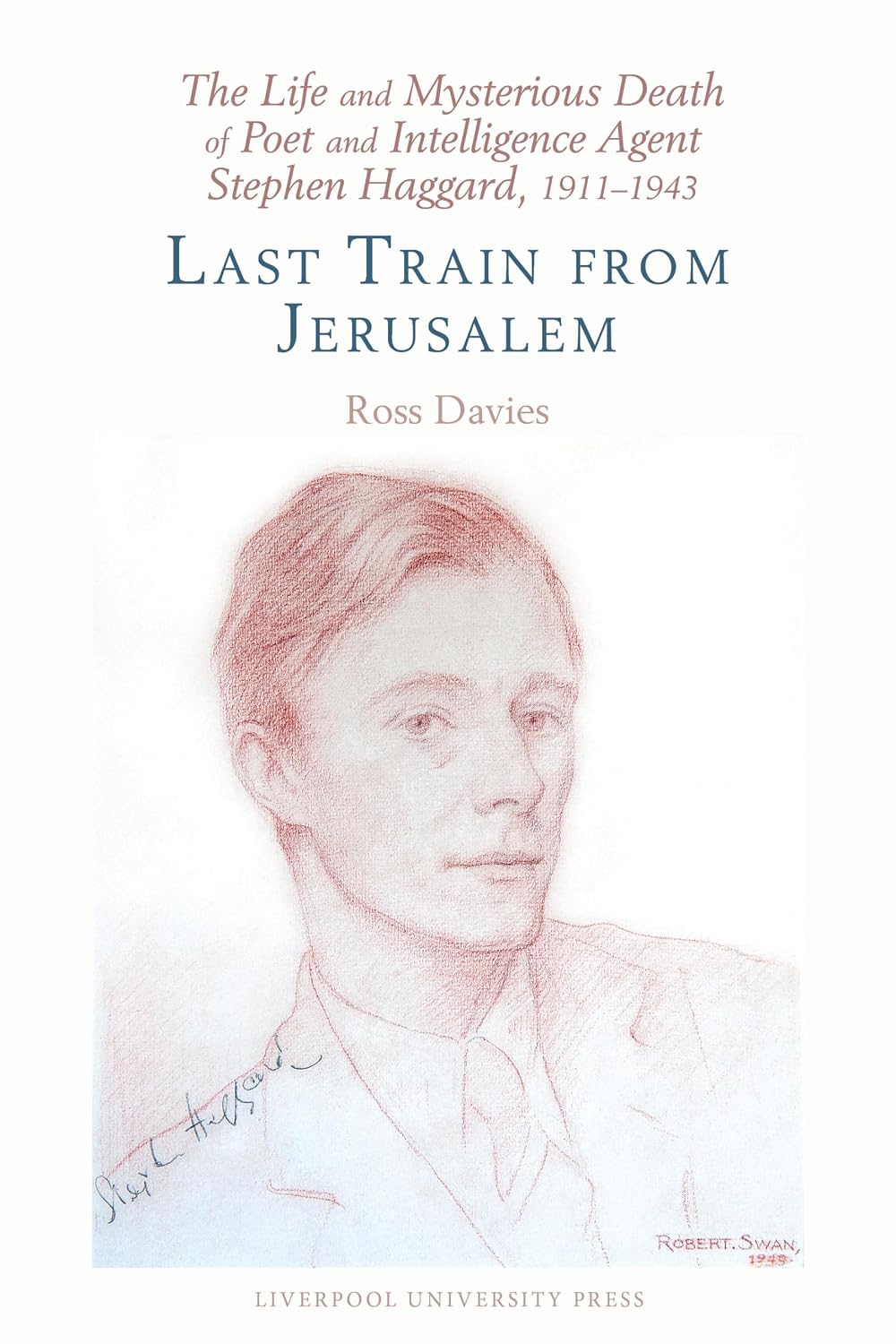
Vauxhall’s Tate South Lambeth Road Library doesn’t just stock books but on occasion may even generate one. It’s thanks to the Tate that my latest book, The Life and Mysterious Death of Poet and Intelligence Agent Stephen Haggard, 1911–1943: Last Train From Jerusalem, chugged into being.
Living a mere ten-minute walk away from the library, the reader and writer in me has for years attended and occasionally delivered an evening lecture at the ‘the Tate’. On one occasion, after I delivered a talk about the World War Two poet Drummond Allison, a member of the audience suggested I write about Stephen Haggard, and offered to lend me his copy of his collection of poems I’ll Go to Bed at Noon. I was instantly intrigued by the author and the light his life, death and work throw on the 1939–45 ‘war generation’.
I discovered that in 1943, Stephen Haggard, aged only thirty-one, shot himself in disputed circumstances on a train in Egypt while on active – and secret – service with the Political Warfare Executive.
Life went on. I had other concerns and there matters stood. Then, one day, I found myself talking to a fellow-shopper while waiting in the queue at a greengrocer’s on Brixton Road. It turned out that this was Stephen Haggard’s son, Piers, who lived locally. Piers was an award-winning film and TV director, who won the 1979 BAFTA award for Most Original Programme for Pennies From Heaven starring Bob Hoskins. He campaigned for the rights of his fellow film directors and chaired Directors UK and formed Stage Directors UK. Piers died in February 2023. His widow, the Australian artist Anna Sklovsky, still lives in south London. Their daughter is the actor and writer Daisy Haggard. Stephen Haggard had two sons. Piers, born in 1939, was the elder. His brother Mark, born in 1942, is Emeritus Professor of Psychology at Cambridge University.
Piers offered to help me pursue my project of writing the first full biography of his father. With his support, and that of his brother Mark, including access to family photographs, letters, manuscripts and papers, I delved into the life of this little-known but important character. At times, the research seemed to be as much about literary archaeology as biography. So much documentary evidence was lost. His pre-war papers were fire-bombed during the London Blitz. Others disappeared during the German occupation of Paris. Official British files on his strange and mysterious death had been ‘weeded’ in 1945, and what remained was embargoed for sixty years.
Stephen Haggard’s death made newspaper headlines on both sides of the Atlantic and beyond. It was one of the Second World War’s first deaths of a celebrity in uniform – yet the details were not made public then or since.
Was the death of Stephen Haggard assassination, murder or a suicide?
Then, when I was deep in the writing, previously unknown wartime letters came to light and shed light on Stephen’s sudden and terrible end. I had, at last, some insight into what had happened.
The result is a biography, which as this long-term Vauxhall resident is pleased to say, was accepted by my first-choice publisher, Liverpool University Press. I am Liverpudlian by birth, you see born in Merseyside’s ‘copycat’ Vauxhall district.
Ross Davies (2026). The Life and Mysterious Death of Poet and Intelligence Agent Stephen Haggard, 1911–1943: Last Train from Jerusalem
Liverpool University Press
Formats: Paperback, hardback and ebook