
Vauxhall History’s Ross Davies delves into mudlarker Lara Maiklem’s explorations on the southern bank of the Thames at Vauxhall. Maiklem has recently been appointed Mudlark-in-Residence at Southwark Cathedral.
MUDLARKING
‘Mud-larking’ is an eighteenth-century term for ‘one who dabbles, works, or lives in mud’. Mudlarks were then at the bottom of the pile of 11,000 thieves who lurked around ship’s hulls at low tide looking for the packets of spices and sugar and bladders of rum that crewmen threw overboard for collection and delivery to the taverns of Wapping and Rotherhithe.
Earlier names for gang members include ‘scuffle hunters, game watermen, heavy horsemen, light horsemen, night plunderers and river pirates’. Each colourfully named gang had their own speciality.
In more recent times, metal-detectorists and other individuals searching the foreshore for historic artefacts have described themselves as mudlarks.
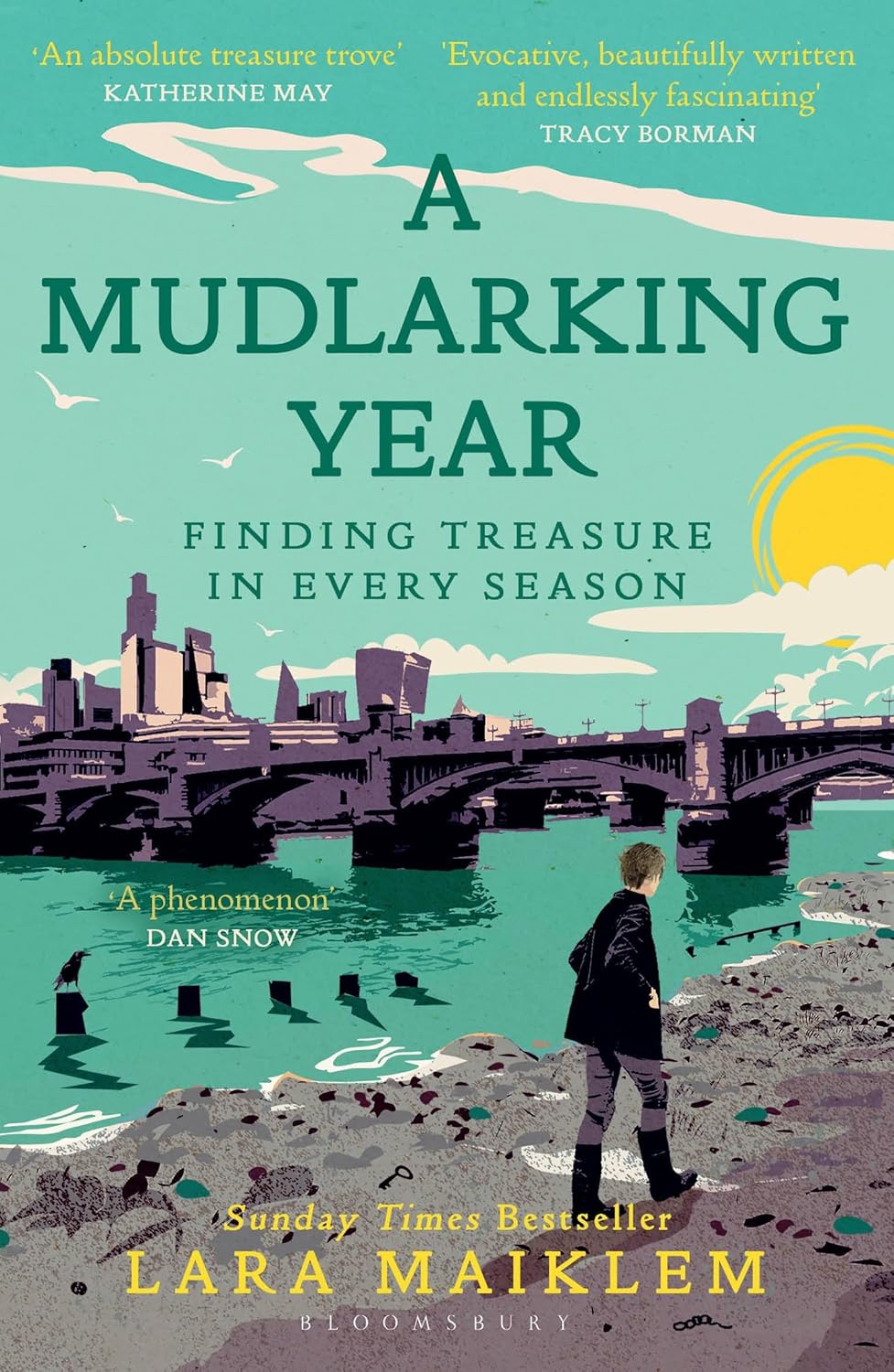
‘Since I first went to Vauxhall years ago, the riverside has filled with tall buildings and hutch-like apartments piled one on top of another,’ writes Lara Maiklem in her latest book A Mudlarking Year: Finding Treasure in Every Season (Bloomsbury, 2024), the follow-up to her 2019 best-seller, Mudlarking: Lost and Found on the River Thames.
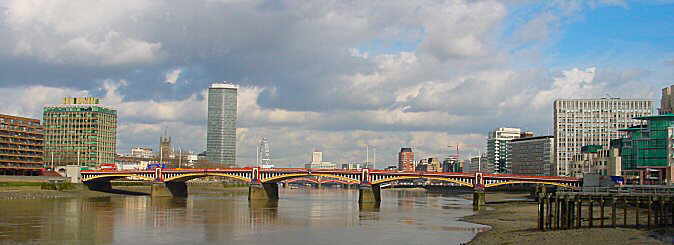
Today’s Vauxhall riverside, Lara observes, is a ‘futuristic’ jumble of glass and steel fighting for space beside the river. It’s ‘a far call from the fetid alleyways, decrepit houses, wharfs, boat yards and stinking factories that rumbled towards the river 200 years ago.’
As Lara describes in A Mudlarking Year, it’s July and she plans a trip to Vauxhall with Flora, a fellow mudlarker with a doctorate in Anglo-Saxon history and literature. Normally, Lara mudlarks alone but she finds Flora ‘quiet and easy company’.
In A Mudlarking Year Lara relates how in 2020 a Jiffy bag labelled ‘FRAGILE MUDLARK FIND 1979’ was given to her by an eighty-year-old woman who, married to her ‘mudlarking soulmate’, had lived and mudlarked in Vauxhall for seventeen years, combing the riverbank at low tide for treasures. Inside the bag was a ‘ceramic Cherry Toothpaste pot lid from the Army & Navy Co-operative Society, founded in 1871’. The lid had been broken in half and carefully glued back together.
The woman’s accompanying letter explained that she had found one half of the lid on the foreshore and her husband had found the other a mile further upriver. On the back of the lid in black ink were the words ‘THIS WAS FOUND IN TWO PIECES, APPROX. 2 WEEKS APART IN THE RIVER THAMES AT VAUXHALL. 1979’.
The sender’s husband had died and she was now too old and frail to mudlark. As she thought her family would not be interested, she had decided to send her ‘impossible trophy’ to Lara to either return to the river or keep, however Lara saw fit. Lara ‘saw fit’ to thank her sender and reply that she is not going to throw back such a treasure into the Thames. How could I? she asks, adding, ‘I’ve kept the “impossible trophy” in my finds chest, along with the letter and the weight of responsibility for someone else’s story.’
On this day in July, however, Lara is hoping to show Flora a Saxon fish-trap, an extremely rare and fragile artefact. Ignoring the 12-foot (3.6m) iron ladder giving access to the foreshore, they drop down from the river wall and scramble onto the hot, dry shingle, dodging a gaggle of Canada geese wolfing down green algae, their beaks making ‘loud plastic clattering sounds as they snap at it’.
Eventually, amongst a tideline of plastic and driftwood, they spot two short, black timber uprights. These once supported wattle panels that funnelled fish into a woven basket. Growing from one, up by the river wall, is a single, stunted tree. This ‘mysterious damp-dweller’ is an alder, its timber prized for its resistance to rot in water. As the tidewater recedes, two more uprights are revealed. For Lara, it’s an indication that the past is ‘inching its way into the present again’.
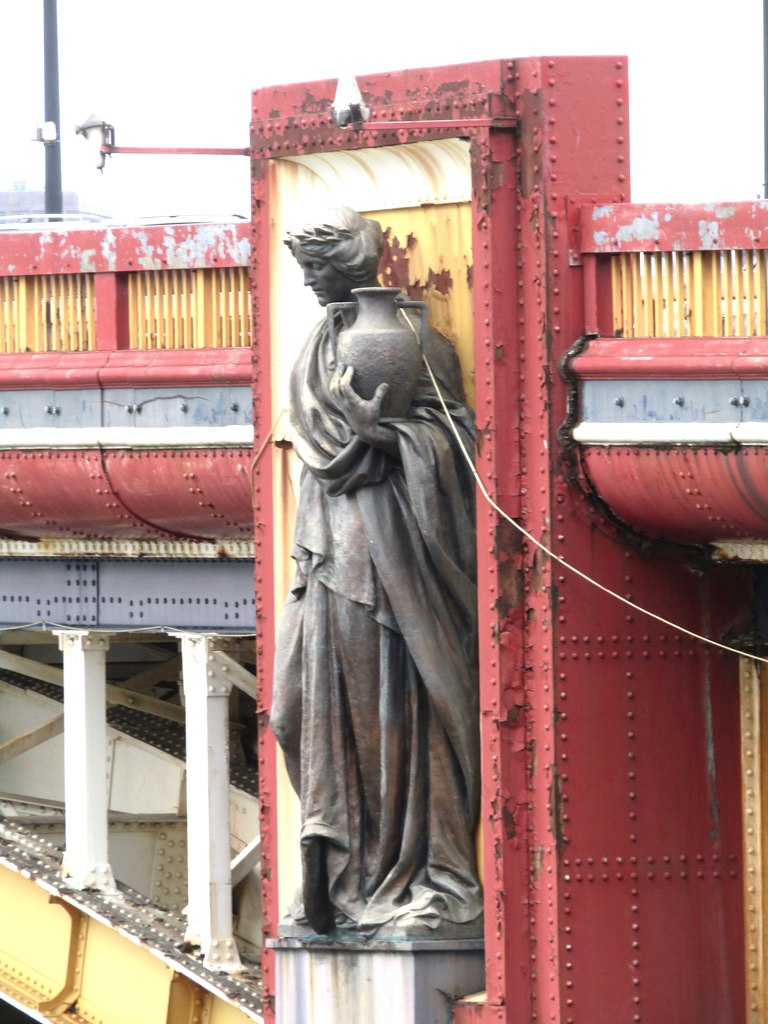
Afterwards, Lara and Flora walk east towards Vauxhall Bridge, a section of foreshore seemingly ‘sparse’ in its promise of further discoveries and even more so after the recent addition of a cofferdam. This watertight enclosure constructed of piles with clay packed between them, from which the water is pumped to ensure the dry foundation for a pier or bridge, is part of the Thames Tideway Tunnel. They crane their necks around the wall of the cofferdam to see the twice life-sized bronze figures of women on the side of the bridge, representing Pottery, Engineering, Architecture and Agriculture. A ‘thick lagoon of creamy mud’ has pooled underneath. ‘I throw in a stone to check its consistency and depth,’ writes Lara. ‘It lands with a silky plop and I decide not to walk through it to see the ladies of Fine Art, Science, Local Government and Education on the other side.’
The two mudlarks turn and as they head back they spot a pleasingly shaped stone, flat on one side, domed on the other, unlike anything else on the foreshore. It fits perfectly in Lara’s palm; the flat side worn so smooth as to be almost shiny. ‘A grinding stone?’ Lara asks Flora. ‘Maybe’ is her reply. If it is a grinding stone, it could be almost any age – prehistoric or quite recent – such stones having been used for thousands of years to crush, grind and pound everything from corn to pigments and plants.
The enigmatic stone is the only portable find to be had that day so Lara drops it into her bag and onwards the two mudlarks crunch back through the mud and pebbles to Vauxhall.
SOCIAL MEDIA
Follow Lara Maiklem on Instagram: @london.mudlark
LARA MAIKLEM – SOUTHWARK CATHEDRAL MUDLARK-IN-RESIDENCE
In June 2026 Lara Maiklem was appointed Southwark Cathedral’s first Mudlark-in-Residence, creating what is believed to be the UK’s only permanent mudlarking role within a cultural or heritage organisation. Southwark Cathedral has a display of objects discovered on the Thames foreshore.
MUDLARKING ON THE THAMES – THE REGULATIONS
It is illegal to mudlark, ie search and remove items from the Thames Foreshore, without a permit issued by the Port of London Authority. The Standard permit is sufficient for most uses, with the more advanced Mudlark permit only issued to members of the Thames Mudlark Society.
THAMES EXPLORER TRUST
The trust offers In the Footsteps of Mudlarks, one or two-hour guided foreshore exploration for families and adults.