
The night Lambeth was devastated by a German missile – and a curious local connection to its Nazi designer
By Ken MacTaggart FBIS
Death fell silently from the sky.
The residents of Lambeth were accustomed to the rising and falling whine of air‑raid warning sirens, and the steady drone of aircraft engines as fleets of German bombers carried their deadly loads towards the city.
Many had also heard the curious ‘putt-putt-putt’ stutter of the later V-1 Flying Bomb, or ‘Doodlebug’, followed by an ominous quiet as its engine suddenly stopped. Then it started its final glide to earth to wreak destruction on London’s streets – the silence giving an unmistakable warning to those below as they scattered to seek shelter from the imminent blast.
But this occasion was different. There was no sound and no warning as the Flying Bomb’s successor, the giant V-2 missile, plunged towards Lambeth just after New Year 1945, in the final months of the Second World War. It was 8.30pm on 4 January, and in recent weeks as the threat from the air diminished the wartime blackout had been eased from total to a “dim-out”, allowing a low level of street lighting.
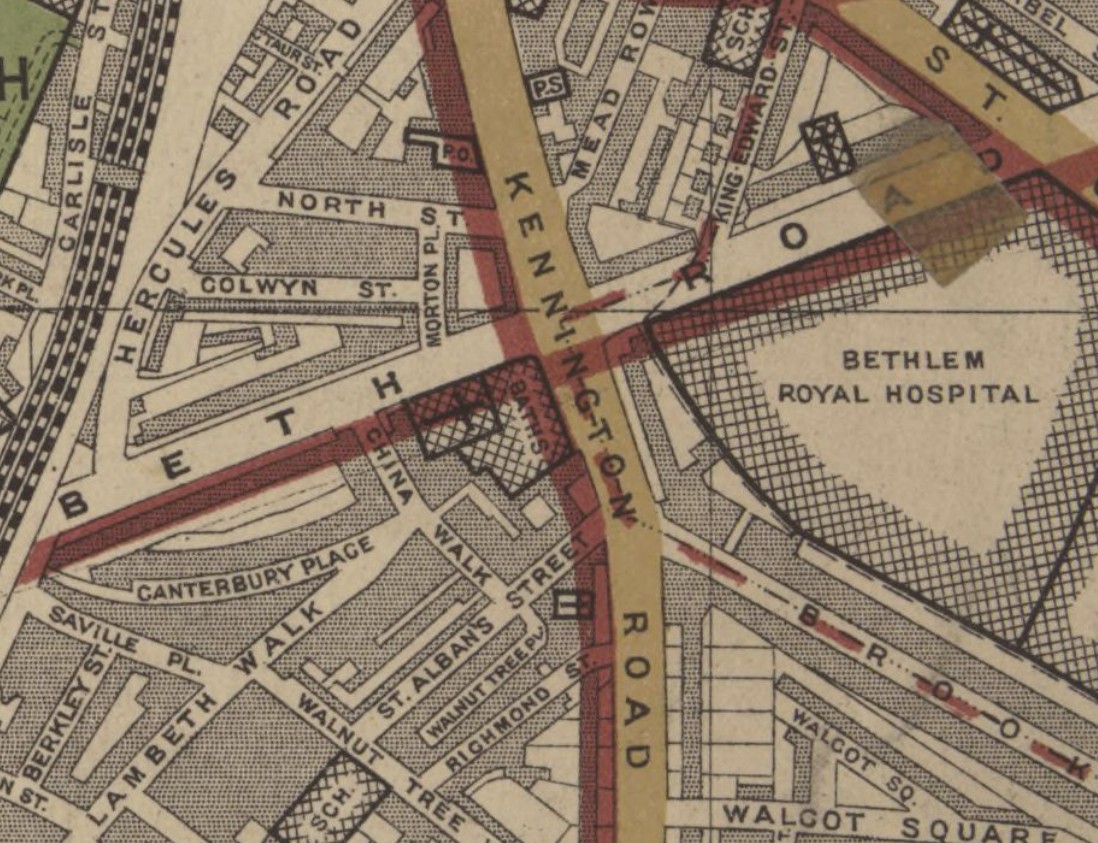
Travelling faster than sound, its fuel exhausted and engine expired, the rocket left no vapour trail and would not have been visible even as a momentary blur, even in daytime. There were no counter-measures against this unstoppable weapon. It plummeted unseen towards the junction of Lambeth Road and Kennington Road.
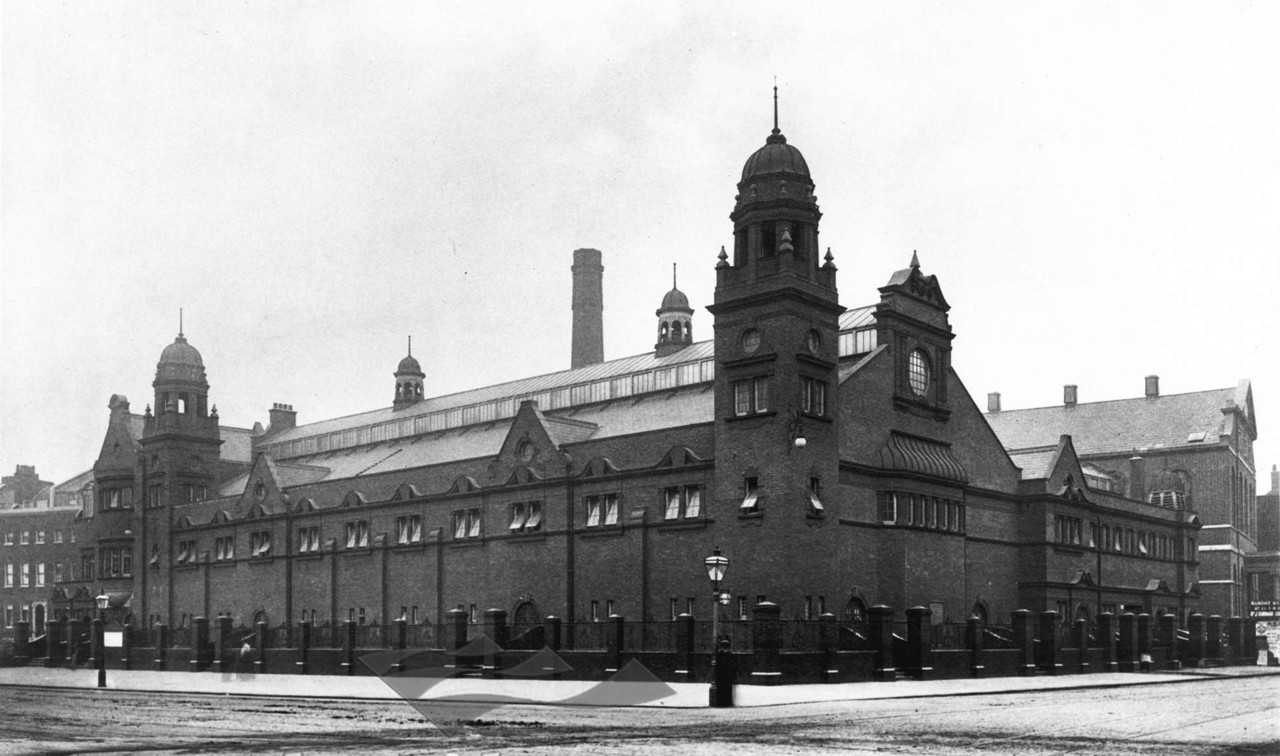
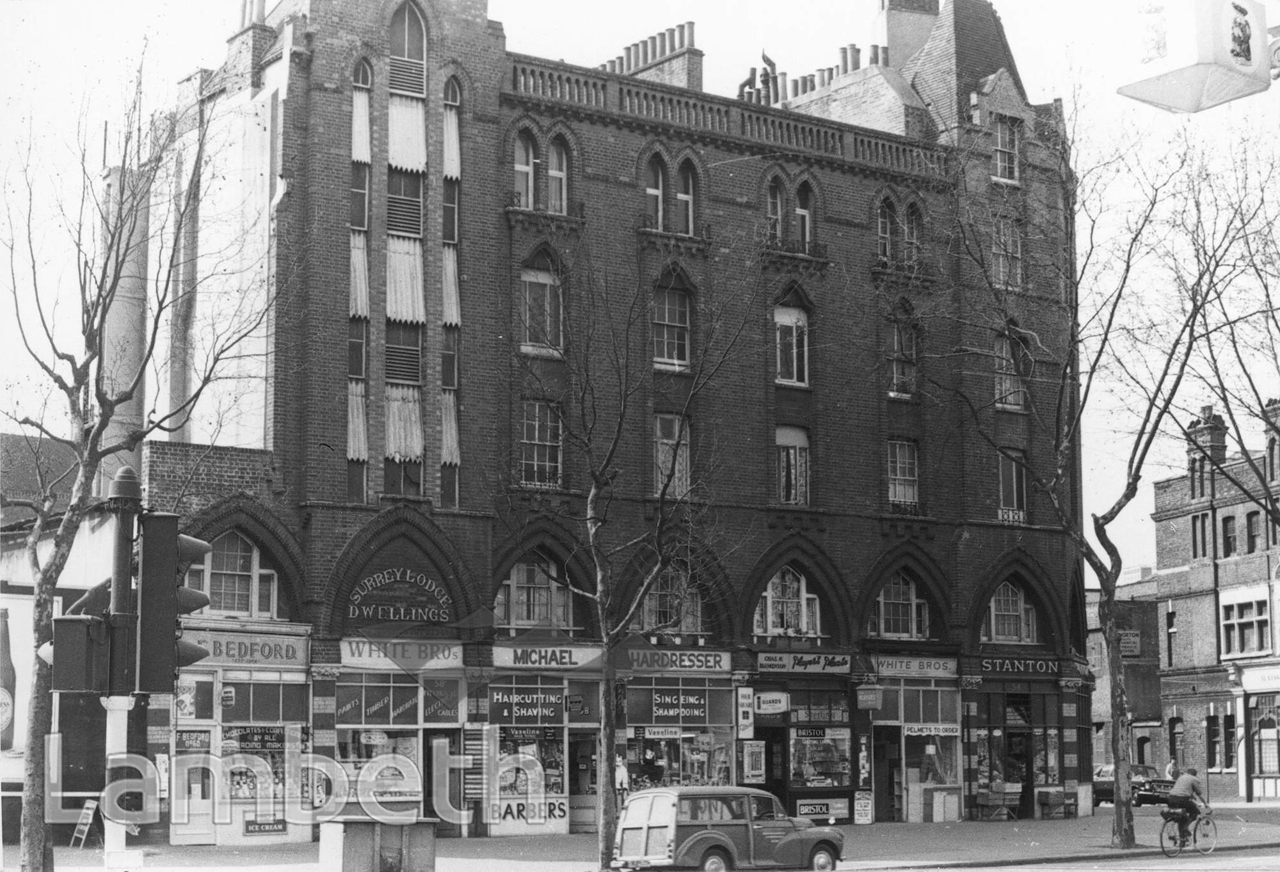
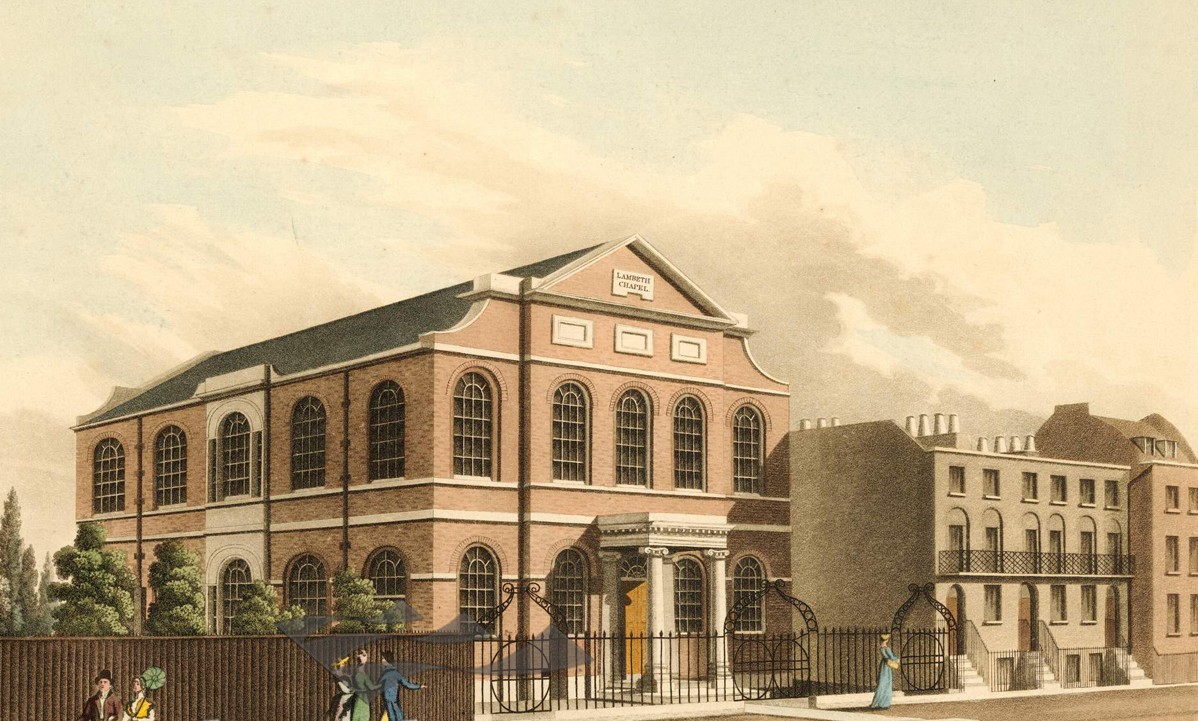
On one corner of the four-ways junction stood the Lambeth Baths and Washhouses, a late Victorian swimming pool with public baths, laundry and wash-house. It was heavily used by the many local families whose homes had limited indoor washing facilities – or none in wartime, due to bomb-damaged water mains. Next door in Lambeth Road was an elegant porticoed Methodist Chapel dating from 1808, and on the corner across the junction stood Surrey Lodge Dwellings, a five-storey apartment block.
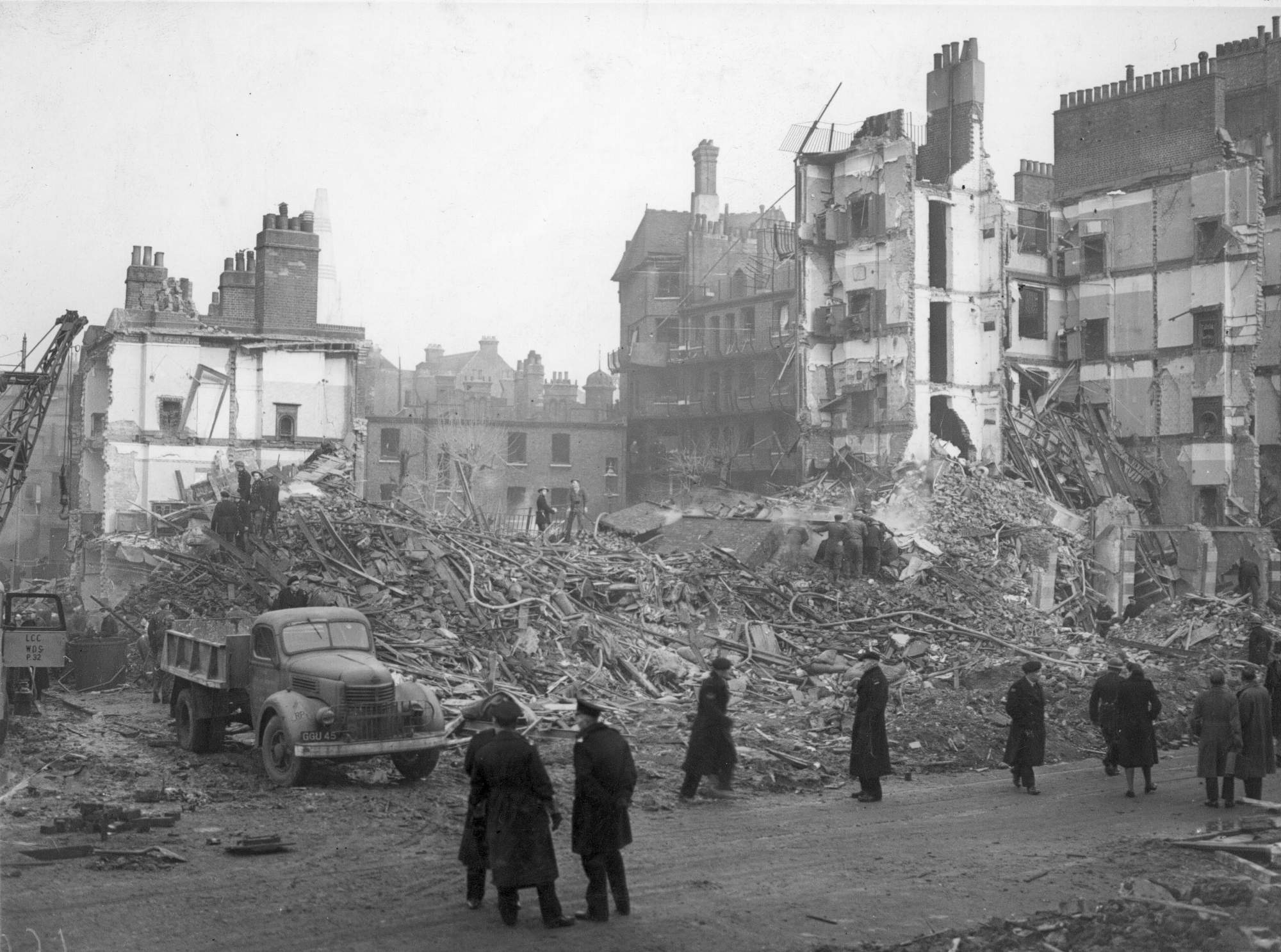
The V-2 made a direct hit on Surrey Lodge. Its warhead, containing 2,000 pounds (900kg) of explosive TNT and ammonium nitrate, detonated on contact. Half of the Lodge, full of residents at that time of the evening, was completely flattened. The front of the chapel collapsed, as did the walls of the Baths which faced Lambeth Road, leaving it roofless. The road junction was blocked with fallen debris.
The Imperial War Museum at that time housed its First World War collection at the south-east corner of the junction, the site of the former Bethlem Royal Hospital, where it remains to this day. The blast extensively damaged the northern and western sides of the museum building.
The historic Three Stags pub at 67–69 Kennington Road, facing the cross-roads, must have suffered badly, although is not mentioned in contemporary reports. It had already been closed by German bombing in May 1941 but had partially re-opened that November. It has fascinating connections with the young Charlie Chaplin, who lived nearby.
Although there was no warning of the incoming missile, some stunned survivors noticed that the detonation was followed by a delayed roaring noise and sonic boom – the rocket had plunged into the building faster than the speed of sound.
The Imperial War Museum records how one survivor described the aftermath of a similar blast once the rumble of collapsing buildings died away.
There was a pause and everything was absolutely quiet for several seconds. After that all you could hear were people screaming from their terrible injuries, followed by the arrival of firemen and Army personnel …to help get us out from the debris. We looked awful with black and dust all over us, and, of course, we were still in our nighties…”
With the grey light of dawn the full extent of the damage was revealed, and the salvage operations continued. Fire Brigade, ARP (air raid) wardens and police worked at the scene. The area was cordoned off and traffic halted on Lambeth Road and Kennington Road. Rescue teams searched for survivors trapped in voids, as casualties were taken to St Thomas’ Hospital.
The Imperial War Museum puts the number of dead from the Lambeth V-2 attack at 42, with an unrecorded list of wounded. Fatalities included many residents of Surrey Lodge, some bath-house staff and passersby. Official secrecy surrounded much of London’s wartime destruction and the ensuing casualties, in order to maintain the morale of the population during the fluctuating fortunes of the conflict. Whatever the actual numbers, this was the most destructive explosion in Lambeth during the war.
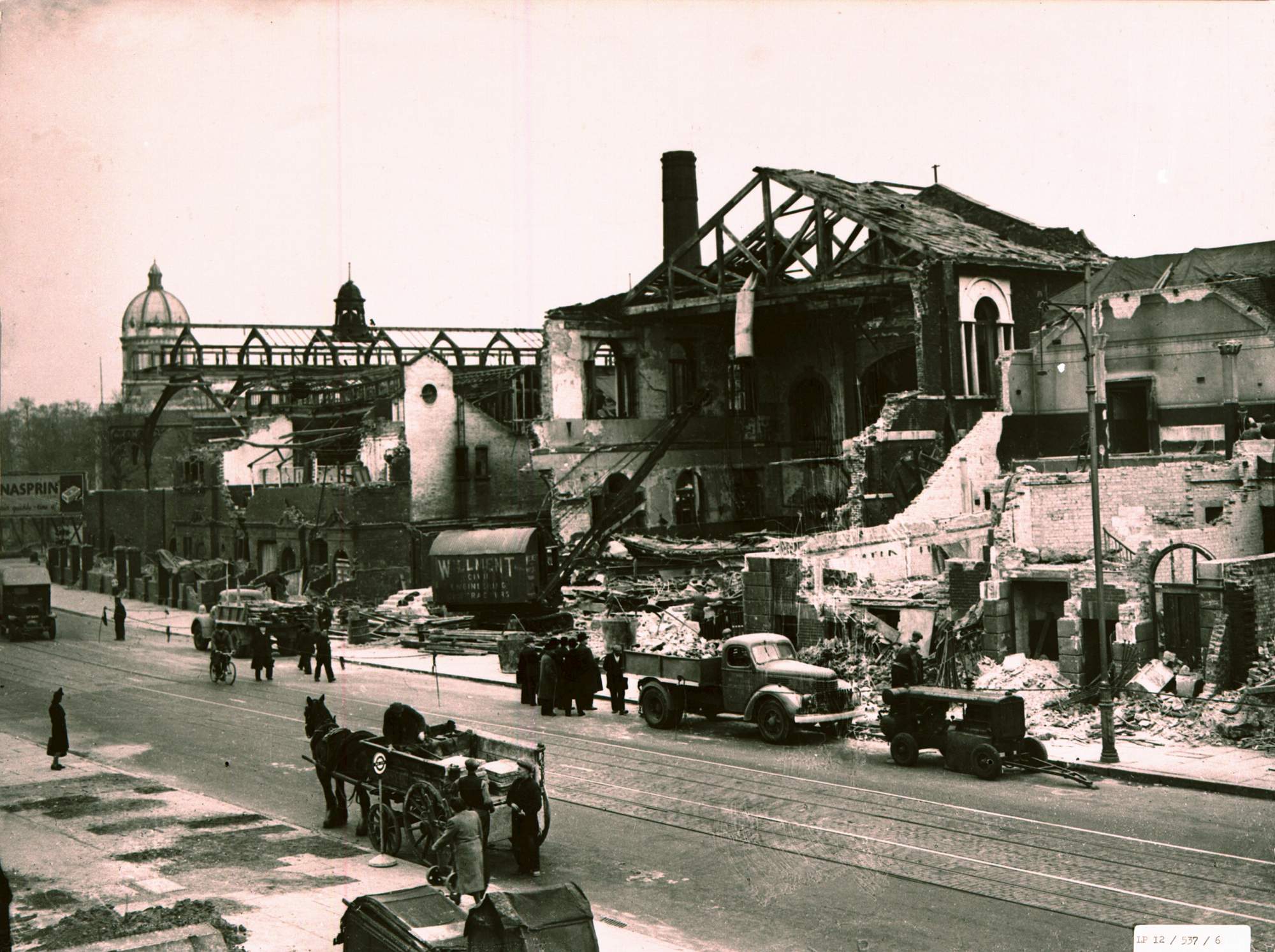
From their first use in September 1944, more than 1,000 German V-2 rockets are estimated to have hit London. They killed more than 2,700 civilians and wounded twice that number. The weapons were also fired against other locations in England, the Low Countries and France.
After the Devastation
Surrey Lodge Dwellings, which took the direct hit and sustained the bulk of the casualties, was aligned on the west side of Kennington Road between Lambeth Road and North Street (now re-developed as Cosser Street). The south end of the building was completely flattened, its debris blocking Kennington Road and spilling into Lambeth Road. However, the northern half of the building, though badly shaken, was later refurbished and continued in use as housing into the 1960s, at least. Later redevelopment created what is now Waterloo Hub Hotel & Suites on the site. An antique stone cattle trough, provided by the Metropolitan Drinking Fountian and Cattle Trough Association, still stands in Lambeth Road near to the south end of what was Surrey Lodge.
The Lambeth Baths and Washhouses, 50 years old when struck, were badly damaged and had to be demolished. They were replaced by a new laundry and bathhouse around the corner in Lambeth Walk, which has since been converted into a medical facility. The historic Methodist Chapel next door was also condemned and knocked down. The site was later redeveloped, and today’s Lambeth Towers were erected in 1972.
The Three Stags pub was repaired and still has many original Victorian features. It remains a lively local, occupying the crossroads building where it has been since 1891. A pub of that name was recorded at a Durham Place as early as 1819, probably an older row at the same location, since demolished.
A Curious Twist
The V-2 rocket (V for Vergeltungswaffe, meaning ‘Vengeance Weapon’) was produced by a team of German scientists and engineers led by Dr Wernher von Braun. Von Braun was a talented technical manager and later a Nazi Party member who helped persuade Adolf Hitler to fund rocket development. He always claimed his main interest was in space exploration rather than military rockets and is reputed to have said of the V-2: “The rocket worked perfectly, but it landed on the wrong planet.”
As the war was ending, with Germany’s defeat imminent, Hitler ordered that all rocketry staff be executed. Von Braun and his team fled with their plans and documents and surrendered to the American forces, who recognised the importance of his skills and secrets. His unit was transplanted to Texas, then Alabama, where they continued building rockets – first for the military, then for the US civilian space agency NASA. In 1969, his gigantic Saturn 5 rocket carried the Apollo 11 mission to the Moon, where Neil Armstrong famously made humanity’s first footprints on another world.
A mile south of the site of the V-2 devastation of Lambeth Baths and Surrey Lodge, a yellow-brick Georgian building at 27–29 South Lambeth Road is home to the British Interplanetary Society (BIS). Its offices are named Arthur C. Clarke House after the visionary English space scientist and science fiction author. Founded in 1933, and now the world’s longest-established organisation promoting the exploration of space, it presents awards to notable individuals and groups in the field.
The Society’s most prestigious award, for those who have made major contributions to the development of astronautics, is an Honorary Fellowship. This was conferred on Wernher von Braun in 1949. In 1961 he also received the BIS Gold Medal. This recognised his leadership of the team which built the Redstone rocket that launched Alan Shepard, the first American in space. Von Braun soon achieved legendary status as the architect of the American space program that beat the Russians to the Moon, appearing on the cover of Life magazine, on TV with Walt Disney and meeting President John F. Kennedy.
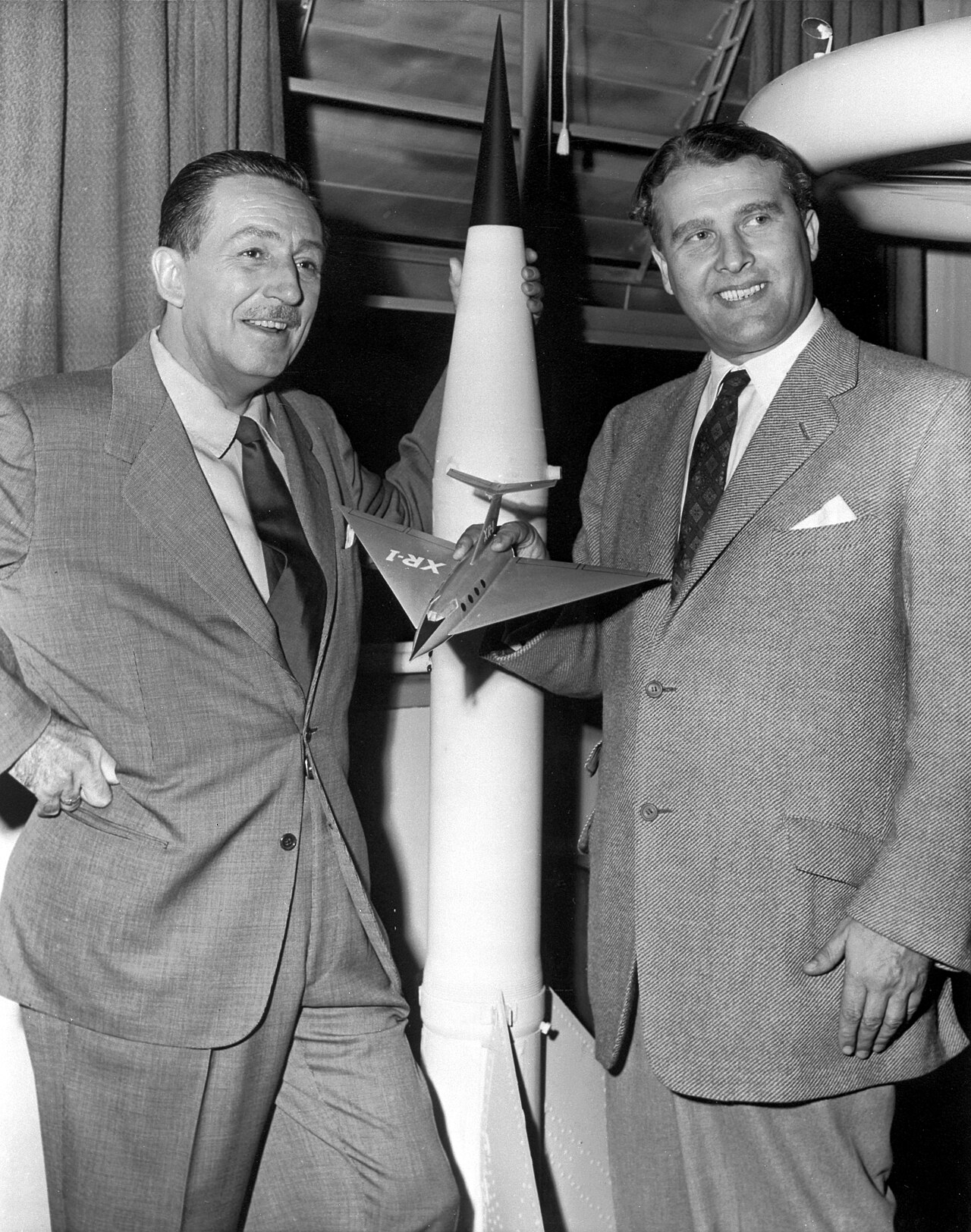
An American citizen since 1955, he now had a wife and three American children. His new work on rocketry was all towards peaceful ends. But the irony of this rather broad-minded recognition by the British Interplanetary Society was perhaps not lost on some of the wartime inhabitants of Lambeth.
British Interplanetary Society
The British Interplanetary Society, based in Vauxhall, is Britain’s leading spaceflight organisation. It has global membership and produces the monthly news-stand magazine SpaceFlight.
V-2 Rocket
The Science Museum in Kensington has a captured German V-2 missile.
Dr Ken MacTaggart
Dr MacTaggart is a Fellow of the British Interplanetary Society and author of the Haynes Astronaut Manual, published in English and Chinese.